The question
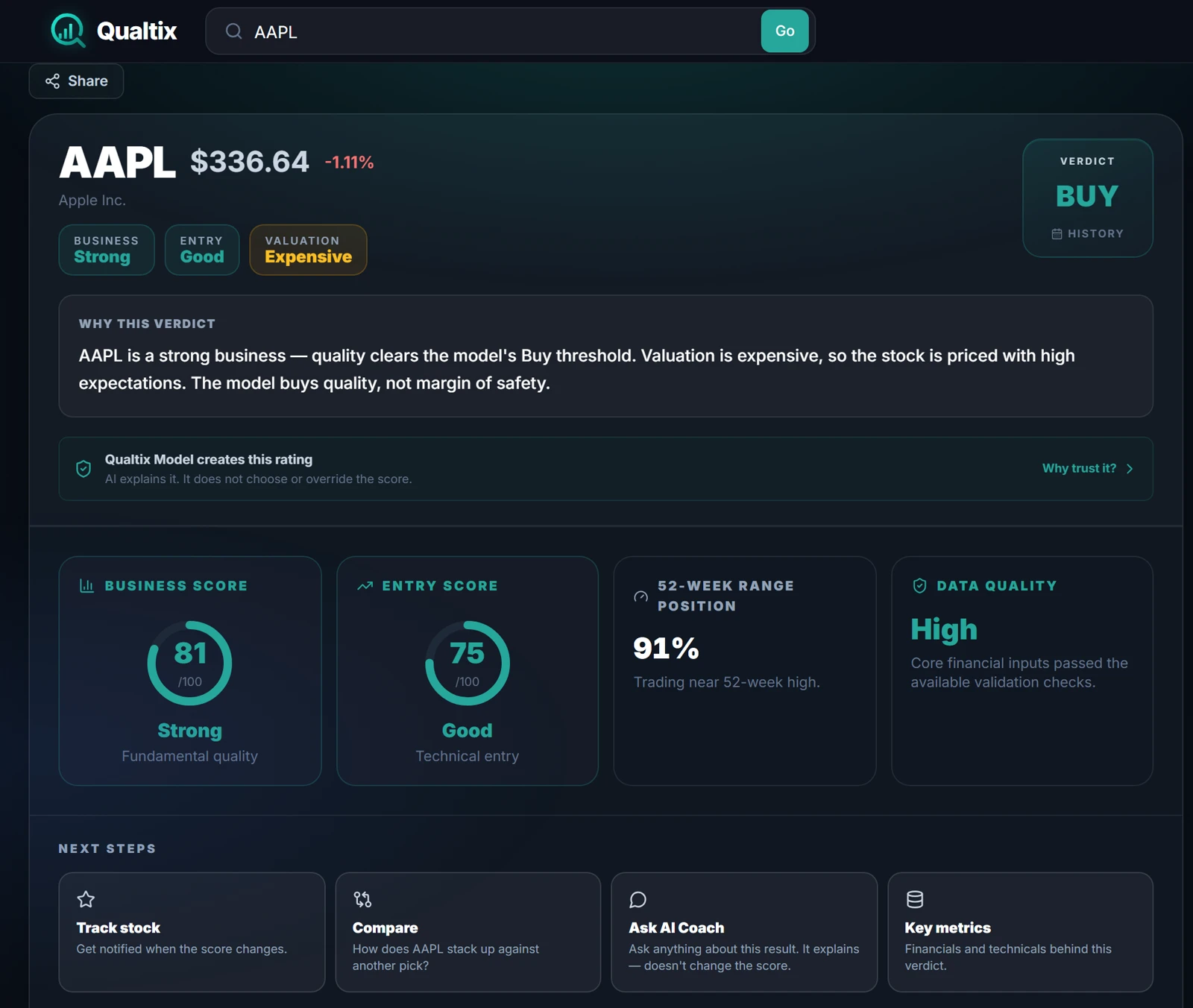
Once videos and search pages began to bring visitors, the important question was no longer how to get more of them. It was what a new visitor should be able to do before the product asks them for anything.
Ask too early, and people leave before they know what they would be signing up for. Ask too late, and the product gives everything away without ever starting a relationship.
The decision
Give the value first. Ask for an account at the moment an account becomes useful to the user.
What I tried and removed
Two early ideas did not survive.
- A welcome screen that every new visitor had to pass. It explained the product before letting anyone use it. I removed it. The product explains itself better by answering a question.
- A guided tour that started on its own. I replaced it with an optional "How it works" page for people who want one.
Both changes follow the same rule: nothing stands between a new visitor and the first result.
Measuring it
A design like this needs a way to see whether it works. I chose one measure to lead: how many visitors complete a first real analysis. Every later step depends on it.
- Each step of the path is recorded, for visitors without an account as well as signed-in users.
- An admin view shows the whole path on one screen.
- Links carry a source tag, so each channel can be read separately.
- Before relying on the numbers, I reviewed how each event is counted and tightened the definitions, for example what counts as a new sign-up.
The outcome
- The first-visit path described here is live: a visitor can go from the home page to a complete result without creating an account.
- The path is measured step by step, from the first page view to subscription.
- I use that view to choose what to improve next, starting from the weakest step.
What I took from it
- Let the product make its own case before asking for anything.
- The timing of a request matters as much as the request.
- Removing a step can be the improvement.
- Check that a number can be true before acting on it.